
Heritage
Why Shiraz, made in the Netherlands?
A grape born in the southern Rhône, named for a city in Iran, finishing its fermentation outside Maastricht. The geography is a coincidence we kept on purpose.
Shiraz the grape is Syrah. Syrah is, by every reasonable account, a child of the northern Rhône — a 1998 genetic study pinned it to the cross of Mondeuse Blanche and Dureza, both from Ardèche and Savoie. The name “Shiraz” came later, attached by Australian growers in the 19th century, possibly via a 13th-century Cypriot legend tying the grape to the Persian city.
It is a coincidence that the name we put on our most-loved red — bottled in the Netherlands, drunk in Amsterdam — points to a Persian city that almost certainly did not invent the grape. We kept the coincidence on purpose. The label says Shiraz because the dual reading is the point.
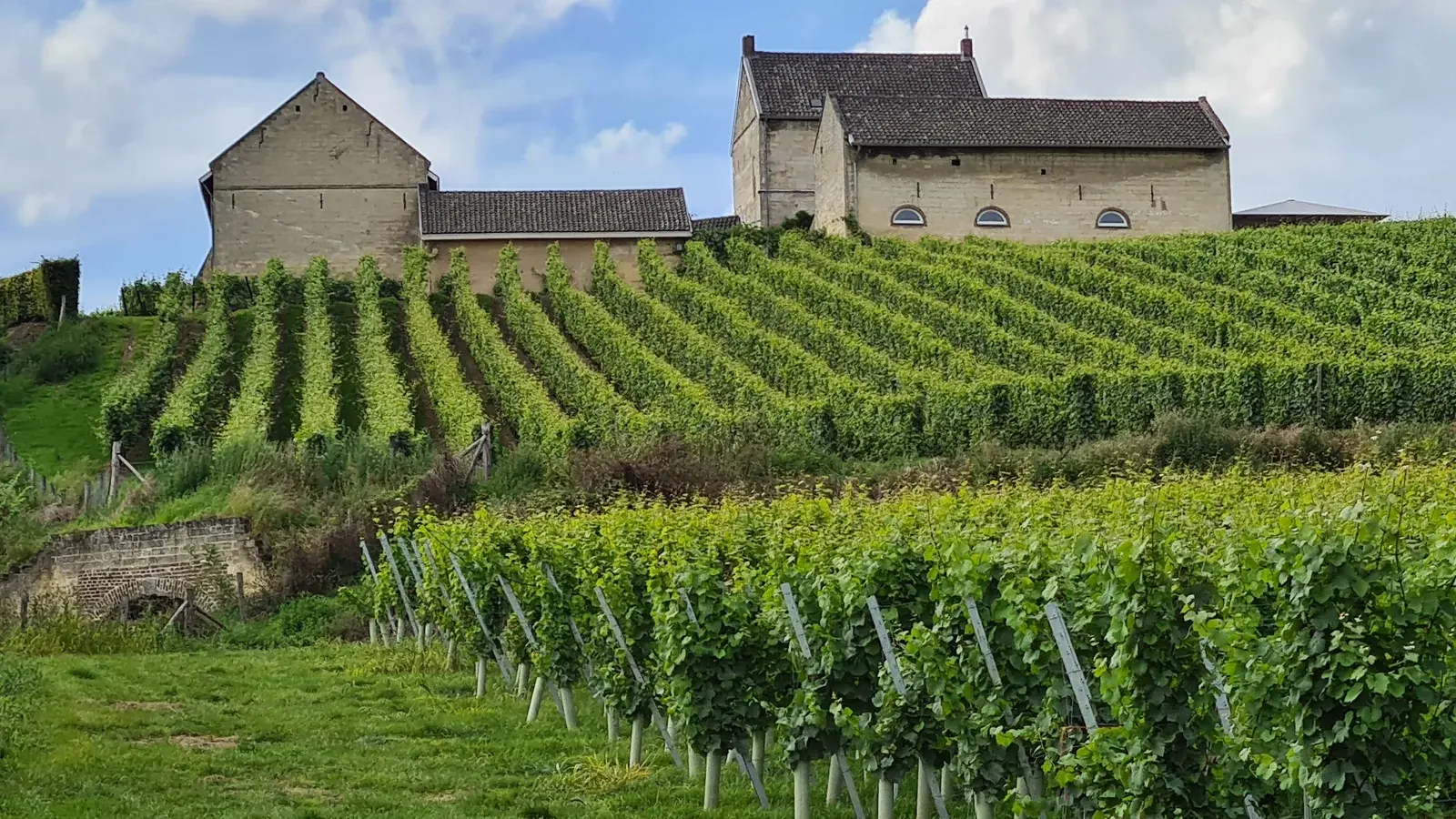
The grapes are grown south of Maastricht, on a south-facing slope above the Geul valley. The Netherlands sits at the northern edge of viable wine country — climate change made the project sensible, and the same climate change makes it complicated. We harvest in two passes, fourteen days apart, to compensate for uneven ripening.
The result, on the table, is a Shiraz that drinks closer to a Crozes-Hermitage than a Barossa: medium-bodied, peppery, with a slight green-stem note in younger vintages that softens into bramble after eighteen months in bottle.
More from the journal — browse all articles.