
The story
A name worth carrying — and the discipline to deserve it.
Six chapters, in the order we lived them. Read in one sitting or come back to a single one — each stands on its own.
01
On choosing to call a small Amsterdam distillery after Cyrus the Great
A name we had to earn
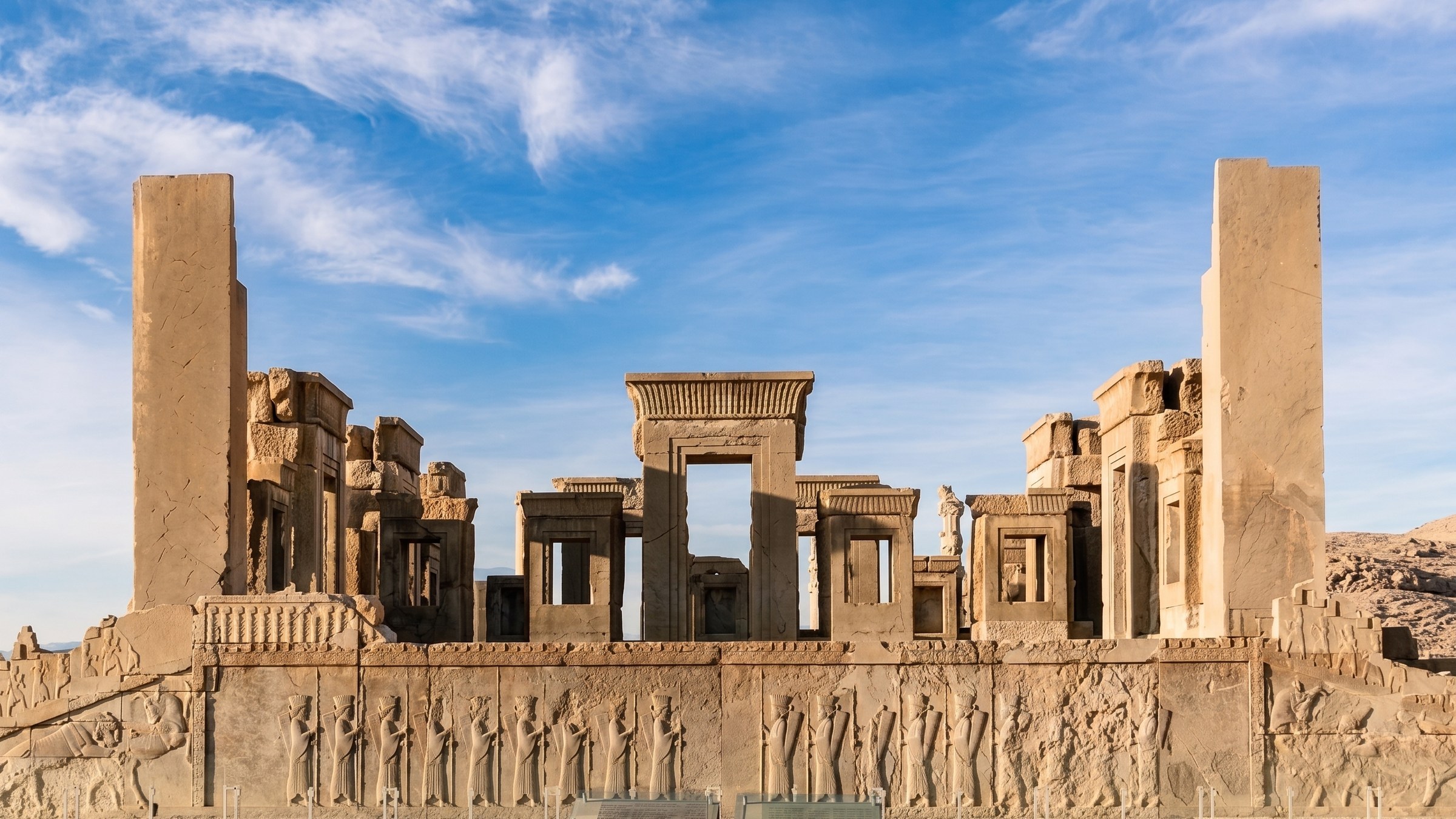
Cyrus II of Persia signed the world’s first declaration of human rights and built an empire that respected the languages and gods of the peoples inside it. We are not building an empire. We are making bottles. But we wanted a name that pointed somewhere — to a tradition older than ours, to a discipline larger than commerce.
The first batch of Saffron Gin came out of a copper still borrowed from a friend in Schiedam. The labels arrived from the printer two days later than we’d planned, so the bottles sat on a kitchen table for forty-eight hours, waiting to be dressed. By the time the labels went on, the gin had already been promised to a wine bar in De Pijp, a hotel on the Keizersgracht, and a chef who refuses to be named in print.
“We didn’t want a name that explained the brand. We wanted one that asked something of it.”
02
Why the Saffron Line begins, and ends, with one ingredient
The saffron that started it
Iran grows around 90% of the world’s saffron. Khorasan, in the country’s northeast, ships threads that taste of honey, leather, and dry hay. We buy ours from a family co-operative outside Torbat Heydarieh — small enough that we know the women who pick the stigmas, large enough that the supply doesn’t fail when one harvest disappoints.
Cold-macerated for forty-eight hours before distillation, the saffron threads release colour first, then aroma, then the rounded warmth that makes the Saffron Gin sit so well on its own. We use 2.4 grams per litre. That sounds modest until you hold a single thread between your fingers.
03
On distilling in the Netherlands, sourcing from Iran
A Persian-Dutch hand
Both sides of the family are present in every bottle. The Dutch side gave us the discipline of cold rooms, calibrated thermometers, and a tax authority that takes your paperwork seriously. The Persian side gave us the patience to wait three months before a spirit feels ready, the willingness to use ingredients other distillers find too expensive, and the conviction that a good bottle should taste like a place — never just a flavour profile.
04
Why our bottles sit alongside food, not in front of it
Built for the table, not the shelf
A lot of the spirits world is built around the bottle as object: heavy glass, gold foil, fonts that take their own throat-clearing seriously. We chose the opposite. Our bottles are weighed for pouring, not display. Labels are letterpress because letterpress wears in honestly — a chipped corner reads as story, not damage.
The Shiraz Red is bottled at 13.5% because that’s where the grapes wanted to land in the Netherlands climate — not at 15% because a marketing team thought bigger numbers sold. The Saffron Beer is brewed bitter enough to clear the palate before the next sip; the gin is proofed for cocktails first, neat sipping second.
“If our gin is the loudest thing on your table, we’ve made the wrong gin.”
05
Where we are, what we’re working on
The cellar today
We work out of a converted warehouse in Amsterdam-Noord. Two copper pot stills, one column still for the vodka, a five-hectolitre brewhouse for the beers, and a small cellar where the Shiraz finishes for six months in neutral French oak. The whole operation runs on five people. We could be larger. We are not in a hurry.
Next on the bench: a barley-aged saffron gin, finishing its first eight months in second-fill bourbon barrels. A rosé made from Petit Verdot grown south of Maastricht. A bottled negroni — already mixed, already balanced, ready for a glass and a single rock of ice.
06
The end of the story is the part we haven’t written yet
What this brand owes
A brand that takes its name from a 2,500-year-old emperor inherits a debt. We take it seriously. 1% of every order goes to Tarlan, an Amsterdam non-profit that resettles Iranian artists, journalists, and human-rights advocates fleeing political reprisal. We don’t put this on the bottle. It feels louder than it is.
If you’re reading this, you’ve probably opened one of our bottles. Thank you. The next chapter is the bottle you open next, and the one after that, and the meal you put around them.